
Residential Mold Inspections
What’s included:
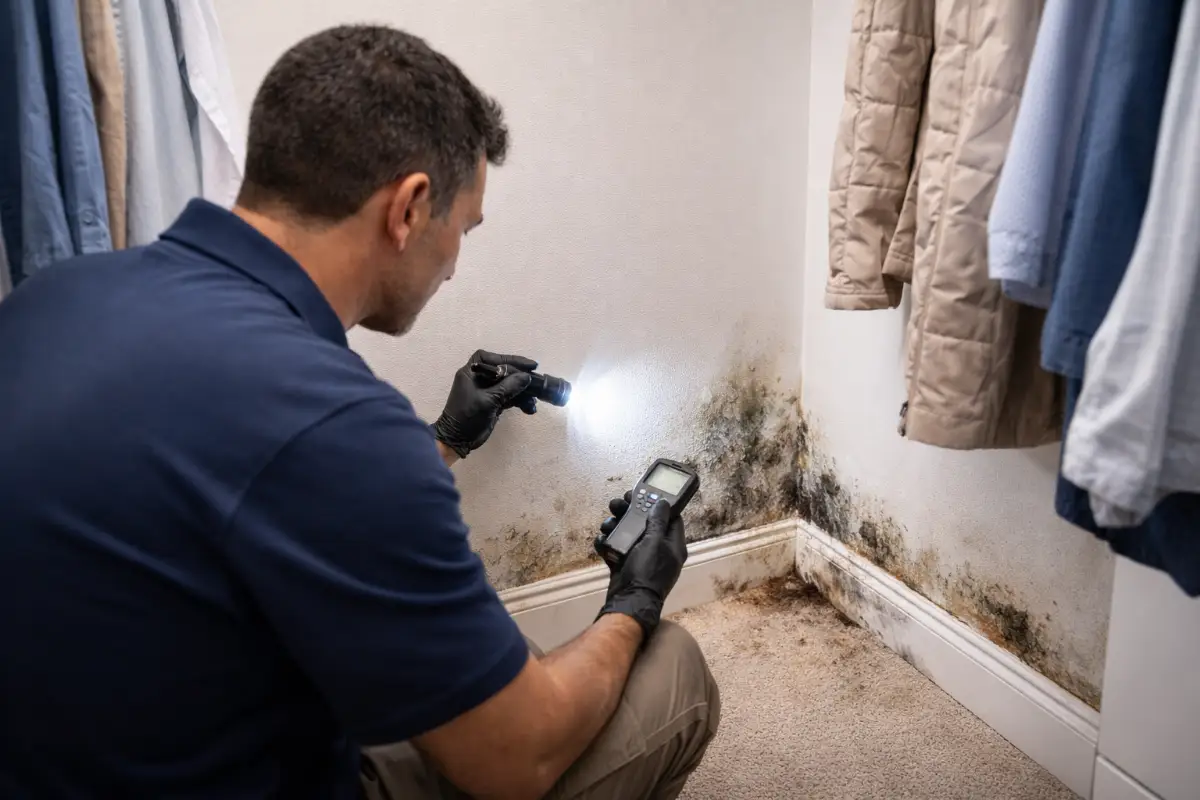
- Detailed visual inspection of concern areas
- Moisture measurements where leaks and humidity collect
- Thermal imaging to detect hidden moisture patterns
- Air and/or surface sampling when appropriate
- Independent lab testing and documented results
- Photo documentation you can actually understand
- A clear report with next steps
- Remediation Protocol if mold is confirmed (your contractor blueprint)
Best for:
- Musty odor or visible staining
- Past leak, overflow, roof issue, AC drain line problem
- Home purchase/sale concerns
- Symptoms that worsen indoors
- High humidity and persistent condensation issues

What You Always Get with Mold Finders
- Professional inspection and documentation
- Independent lab testing when samples are taken
- A report built for action—not confusion
- Clear explanation of what was found and why it matters
- Protocol guidance when mold is confirmed
What Happens Next (Fast, Clear Steps)
- You contact us (call or form)
- We schedule (often same-day or next-day)
- We inspect and test as appropriate
- You receive your report with photos and lab results
- If mold is confirmed, you get a protocol so you can hire remediation with confidence
You can talk about Residential Mold Inspections with the following specialists in any of our offices:
Related FAQs
What are common signs of mold?
Musty odors, staining/discoloration, past leaks, persistent humidity, and symptoms that worsen indoors are common warning signs.
Is all mold dangerous?
Some molds are more concerning than others, but even common mold can trigger reactions and indicate moisture problems that should be addressed.
Can I just clean mold with bleach?
Surface cleaning may hide staining, but it often doesn’t solve the underlying moisture issue—especially on porous materials. A professional inspection identifies what’s actually happening and what should be removed versus treated.
Do I get a report?
Yes. You receive a clear report with photos and lab results. If mold is confirmed, you also receive a remediation protocol.
What indoor humidity should I maintain?
Generally, 30%–50% is ideal. Consistently high humidity increases mold risk.